
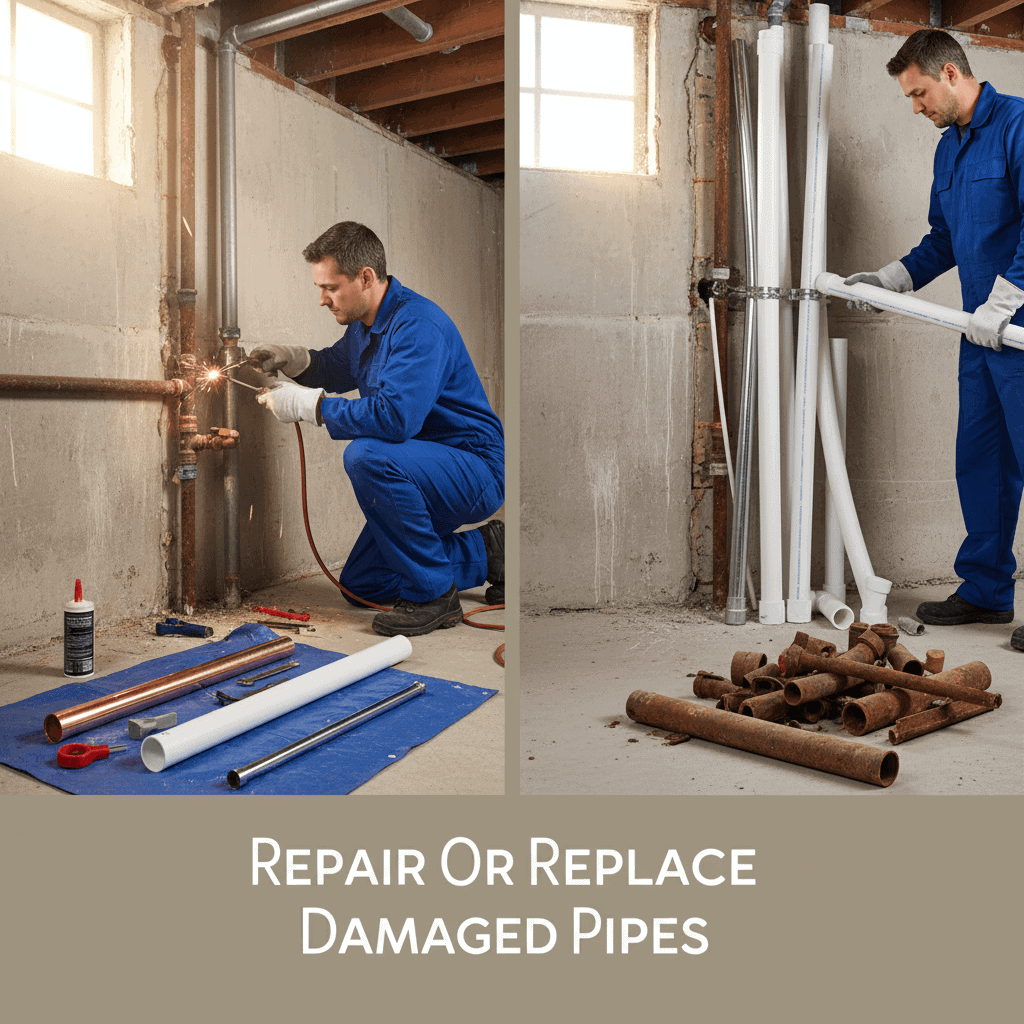
Deciding whether to repair or replace damaged pipes is one of those household choices that can feel urgent and confusing. A trickle that started as a small stain can become a full ceiling collapse, while an older pipe might give a final warning before failing entirely. This article walks through practical signs, durable data, and cost comparisons to help you choose the right route for your plumbing problem.
I will explain how to inspect damage, which conditions favor repair, which call for full replacement, and what to ask a plumber before committing to major work. You will find examples, quick checks you can do at home, and tips to reduce long term risk and cost.
How to assess the damage to your pipes
Start with a calm inspection and gather facts. Look for visible leaks, stains, bubbling paint, or mold growth. Listen for unusual sounds like constant running water or a steady drip. Check water pressure at several fixtures. Note the location, size, and frequency of leaks. A single small pinhole in a copper line is different from multiple cracks in a cast iron main.
Use a simple checklist when you examine the system
- Age of the plumbing system and last known updates
- Material type for affected pipes
- Number of leak sites and whether they are clustered
- Visible corrosion, scaling, or soft spots in pipe walls
- Water discoloration and sediment
- History of frozen pipes or previous repairs
Signs that favor repair over replacement
Repair can be the smarter choice when the issue is limited, localized, and not part of a wider pattern. Typical repair candidates include a single small leak, a loose joint, or a section with minor corrosion that has not spread. Repairs are also a good option when pipe material is still in active service life and the rest of the system is solid.
Consider repair if these conditions apply
- The damage is confined to one accessible section
- Pipe material is modern and in good condition elsewhere
- Repair will restore safe operation for several years
- The cost of repair is a small fraction of replacement
Example: A homeowner finds a hairline crack in a copper line under a sink. The house has updated plumbing and no other issues. Replacing the short section and resealing joints often solves the problem at low cost.
Signs that favor full replacement
Replacement is usually the better long term investment when damage is widespread, the system is old, or the pipe material is failing in many spots. If you have multiple leaks, recurring repairs, or pipes made from unreliable materials, replacement reduces the chance of emergency failures later on.
Replace pipes when you see
- Multiple leak locations or recurring leaks after repair
- Severe corrosion, pitting, or flaking inside the pipe
- Materials known for short service life such as certain older plastics or galvanized steel
- Water discoloration that indicates internal decay or heavy rust
- Low water pressure caused by internal buildup across long runs
Case in point: A bungalow with original galvanized steel piping may suffer from long term mineral buildup and corrosion. Patching one leak will not stop another appearing next month. Replacing the main runs with modern materials is usually wiser.
Common pipe materials and what to expect
Different materials have different life spans and failure modes. Identifying the material helps set realistic expectations about repair longevity and replacement timing.
Copper
Copper is durable and often lasts several decades. Problems include pinhole leaks from corrosion and damage from aggressive water chemistry. Small localized repairs often hold well, while widespread thinning calls for replacement.
PVC and CPVC
Plastic pipes resist corrosion and are common in modern plumbing. They can crack from freezing or UV exposure. Repairs are usually straightforward involving sections or couplings. Replacement may be needed if many joints have failed or if brittle plastic is widespread.
Galvanized steel and cast iron
Galvanized pipes corrode from the inside and are prone to reduced flow and leaks after several decades. Cast iron drains are strong but can rust through. These materials often reach a point where replacement is more cost effective than repeated repairs.
Cost comparison and budgeting for repair or replace
Costs vary by material, access, local labor rates, and the extent of damage. Small repairs can range from a few hundred dollars to a couple thousand for more complex fixes. Replacement of major runs or whole house plumbing commonly runs into thousands or tens of thousands. Use these framing numbers to set expectations and avoid surprises.
- Minor leak repair under sink or at joint approximate low hundreds
- Sectional repair with wall access median one to two thousand dollars
- Repiping a single bathroom or kitchen area several thousand dollars
- Whole house repipe commonly in the high thousands to tens of thousands
Practical budgeting tips
Ask the plumber for a written estimate that separates labor, materials, and any hidden costs like drywall repair. Include a contingency of 10 to 20 percent for unexpected issues uncovered during work. Compare the cost of repeated repairs over a few years against replacement cost to find break even points. For example, if repairs of a failing system would cost 30 percent of a full repipe each year, replacement may be cheaper within a few years.
Financing and scheduling
Many plumbing companies offer payment plans or financing for major replacements. If budget is tight, prioritize critical sections such as supply lines to kitchens and bathrooms, then plan staged work to replace remaining runs later. Scheduling during mild weather can reduce risk of freezes and make contractors more available.
When to call a professional and what to ask
If you see multiple failures, high water loss, mold growth, or structural damage, call a licensed plumbing pro. An expert can run camera inspections, pressure tests, and give an opinion on whether repair or replacement is better value. Ask for a clear explanation of options, expected lifespan after repair, and what will remain covered under warranty.
Questions to ask the plumber
- What is the root cause of the damage and how will the proposed work address it
- What materials do you recommend and why
- How long will the repair or replacement last under normal use
- Do you provide a warranty on parts and labor and what does it cover
- Will you inspect other sections while on site and offer a separate estimate if needed
For more background on the repair or replace choice and a practical checklist to present to a contractor visit www.brightwaterplumbingorlando.com/should-i-repair-or-replace-my-damaged-plumbing-pipes where you can find additional examples and a sample question list.
DIY fixes versus professional work
There are small tasks a homeowner can perform like tightening a joint, replacing a section of visible PEX, or swapping a faulty shut off valve. These actions can temporarily stop leaks or buy time. Avoid attempting major repairs inside walls or near mains unless you have plumbing experience and proper permits.
DIY is reasonable when work is limited, tools are on hand, and you are confident in your skill. Call a pro in any of these situations
- When the work requires cutting into walls or floors that affect structure
- When gas lines, municipal mains, or water heaters are involved
- When permits or code compliance are required
- When you lack the tools or time for a neat, reliable repair
Prevention and maintenance to extend pipe life
Regular maintenance reduces the chance of sudden failures and can push a repair option further into the future. Flushing lines, checking pressure, and watching for early signs of staining or odor are simple habits that help. Installing water softening or filtration can protect against mineral buildup and corrosion in many regions.
Maintenance checklist
- Perform visual inspections twice a year
- Monitor water pressure and address spikes
- Insulate pipes in unheated spaces to prevent freezing
- Schedule professional inspection every few years for older systems
- Keep gutters and drains clear to avoid moisture near pipes
Small investments like installing shut off valves at key fixtures make isolating leaks much faster and limit damage while you arrange repairs or replacement.
Conclusion
Repair Or Replace Damaged Pipes is a decision that blends technical facts with budget and lifestyle choices. If damage is isolated and the rest of the system is in good shape, repair can be the sensible short term solution. When problems are multiple, repeated, or involve aging materials that degrade across the system, replacement is often the more reliable long term choice. Keep notes on inspections, ask clear questions when getting quotes, and weigh the cost of recurring repairs against the cost of replacement.
Take action now by documenting what you find and getting at least two written estimates for significant work. If a small repair will fix the issue and you can verify the rest of the piping is sound, move ahead with the repair. If a camera inspection reveals internal corrosion or multiple failing sections, plan for replacement and get a clear timeline and warranty from the contractor. Making an informed decision reduces the likelihood of unpleasant surprises and helps protect your home and budget. Call a licensed plumbing professional if you are unsure or if the situation involves major mains, structural damage, or health hazards. Acting early saves money and stress in the long run.

